
There are no comments for this product


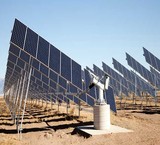
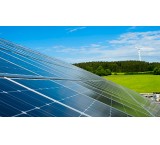
The Islamic Republic of Iran has planned 5000 megawatts of renewable energy for the Fifth Development Plan. So far, only about 100 megawatts of renewable power plants, including wind and solar, have been installed and commissioned in the country. Interestingly, in the Fourth Development Plan, 2000 megawatts of renewable power was also forecasted but was not realized for various reasons. In this regard, we have undertaken extensive studies and operational considerations to develop a comprehensive plan for constructing a solar power plant, which is presented below. Solar energy is one of the renewable energy sources and among the most important. The amount of solar radiation varies in different parts of the world and is highest in the Earth's solar belt. Iran is also located in high radiation areas, and studies show that using solar equipment in Iran is suitable and can supply part of the country's energy needs.
Iran is a country that, according to experts in this field, with over 300 sunny days in more than two-thirds of its area and an average radiation of 4.5 to 5.5 kilowatt-hours per square meter per day, is introduced as one of the countries with high potential in solar energy. Some solar energy experts go further and ideally claim that if Iran equips its desert areas with solar radiation receiving systems, it can supply the energy needs of large parts of the region and become active in electricity export. Studies by DLR Germany show that in an area of more than 2000 square kilometers, it is possible to install over 60,000 MW of solar thermal power plants. If an area of 100×100 square kilometers is dedicated to photovoltaic solar power plants, the electricity produced would be equivalent to the total electricity production of the country in 2010.
Photovoltaic cells convert sunlight directly into electrical energy. About 30 gigawatts of new photovoltaic capacity worldwide became operational in 2011, reaching 70 gigawatts with a 74% increase globally. Actual installations during 2011 were close to 25 gigawatts since some grid-connected capacities were installed in 2010. The operational capacity of photovoltaic systems at the end of 2011 was about 10 times the total global installations of the previous five years, resulting in an average annual growth rate of 58% between 2006 and 2011. The market share of thin-film technology dropped from 16% in 2010 to 15% in 2011. Leading countries in installed capacity by the end of 2011 were Germany, Italy, Japan, Spain, and the USA. Once again, the European Union, due to Germany and Italy, dominated the photovoltaic systems market. These two countries accounted for 57% of new operational capacity in 2011. The EU had about 17 gigawatts of installed capacity and connected nearly 22 gigawatts to the grid. The total installed photovoltaic capacity in the EU by the end of 2011 was 51 gigawatts, about three-quarters of the global installed capacity. This amount of electricity demand would serve more than 15 million European households. In Germany, total installed capacity reached 24.8 gigawatts, accounting for 3.1% of the country's electricity production (1.9% in 2010). Italy set a new record by connecting 9.3 gigawatts of photovoltaic systems to the grid, reaching 12.8 gigawatts by the end of the year. Other top European markets include Belgium (close to 1 gigawatt), the UK (0.9 gigawatts), Greece (more than 0.4 gigawatts), Spain (close to 0.4 gigawatts, dropping from second to fourth place globally), and Slovakia (0.3 gigawatts).
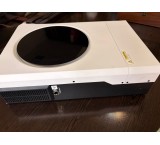
-3- Existing Arrangements for Solar Cells: Various inverters available on the market for grid connection are three-phase and consist of three single-phase converters, each connected to a load terminal. Depending on the solar cell arrangement, inverters are divided into four categories: • Central inverters • String inverters • Multi-string inverters • Microinverters
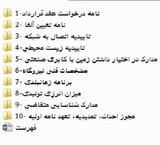
Syllabus for Gas Power Plant Grid Connection Plan Training: 1- Teaching the overall structure of a solar power plant and the voltage-current characteristics of the cell under varying temperature and irradiation 2- Training on the arrangement and connection of series/parallel arrays considering the selected inverter specifications and existing arrangements for inverter selection 3- Modeling solar cells and inverters in DIgSILENT and performing load flow and short circuit studies 4- Protection methods and selection of switches/relays/fuses on both DC and AC sides, performing protective settings and coordination 5- Transient and stability calculations in DIgSILENT 6- Harmonic calculations and power quality 7- Explanation of various grouping options for solar power plant transformers, optimal selection, and grounding system studies 8- Monitoring studies (solar monitoring is similar to gas) 9- Explanation on modeling DSL blocks of solar power plants in DIgSILENT
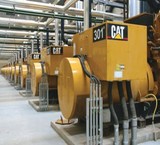
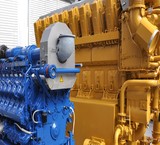
I hold a PhD in Electrical Engineering with sufficient experience in installing and commissioning gas (GAS Engine-Turbine), wind, and solar power plants, as well as obtaining DG power plant permits for both fossil and renewable energy types.
Power Plant Grid Connection Plan (Grid Connection Studies for Solar, Wind, Gas, and Renewable Power Plants)
Some previous experiences in solar power plant permits and grid connection plans: studies for grid connection plans, grid connection permits, construction licenses, connection approvals, environmental permits, and land use changes for various power plants including 2 MW DG Behnoush to Tehran distribution network, 25 MW Mapna CHP desalination plant to Kangan substation-Fars, 16 MW DG rotating power plant of Khuzestan, 25 MW photovoltaic solar power plant Solar Vandad Saman Pars to Sistan regional electricity, 25 MW photovoltaic solar power plant Vandad Saman Pars to Fars regional electricity and Satba, 50 MW wind power plant Ashtian to Bakhtro regional electricity and Satba, 25 MW solar photovoltaic "Atlas Energy East Qeshm" to Hormozgan regional electricity, 10 MW DG distributed generation Ajandsazeh Ebteyaj to Tehran regional electricity, 500 kW photovoltaic solar power plant Mr. Abdi to Khorasan distribution network Satba, solar photovoltaic PV Mehrtab Qeshm with tracking panels and Huavi solar inverter connected to Yazd distribution, 4 MW solar photovoltaic company Gam Sabz Arak to Arak distribution network.
Solar Power Plant Design by PV Sys Includes technical and economic topics, number of strings and series cells, DC inputs, irradiation and panel temperature, panel efficiency considering shadow and hotspot effects, PID and LID calculations, physical design of solar power plants, grounding types for panels and inverters, solar panel structure design standards, two-axis tracker panels.
This design is done by me, Mahan Yousefi, a PhD student in Electrical Engineering, who has completed the following solar power plant connection plans:
1- 10 MW Mehrtab Qeshm solar power plant connection plan to Ghatruyeh substation (Fars Electricity) 2- 25 MW Vandad Saman Pars solar power plant connection plan (Fars Electricity) 3- 10 MW Payagohar Sabz Kavir solar power plant connection plan to Sarjahan substation (Fars Electricity) 4- 10 MW Helia Noor Parsian solar power plant connection plan to Bakhtgan substation (Fars Electricity) 5- 10 MW Petroposhtiban Shargh solar power plant connection plan to Nain substation (Isfahan Electricity) 6- 1 MW Rural solar power plant connection plan in Shahri (Tehran Regional Electricity) 7- 20 MW Reyisi solar power plant connection plan to Saravan substation (Sistan Electricity) 8- 25 MW Vandad Saman solar power plant connection plan to Tel Siah substation (Sistan Electricity) 9- 3 MW Niroo Sabz Gam solar power plant connection plan (Arak Electricity) 10- 25 MW Vandad Saman solar power plant connection plan to Tel Siah substation (Sistan Electricity) 11- 3 MW Mehrtab Qeshm solar power plant connection plan to Morvast substation (Yazd Electricity)
Some approvals and licenses are available at: https://www.instagram.com/solardg_iranian/
There are no comments for this product

| Company | شرکت اهرام فناوری آذرخش |
|---|---|
| Tel | +98 21-0×××6717215 |
| Mobile | +98 912×××7215 |
| Whatsapp link | |
| Instagram page | |
| Website | https://www.dgsolar.ir |
| Country | Iran |
| Province | Tehran |
| Address | خ ستارخان روبروی برق الستوم-پلاک 790 |





Jooyeshgar AI Assistant