
Introduction to the Vibratory Polishing Machine
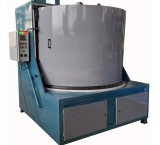
The vibratory polisher is one of the key equipment in the finishing and polishing process of metal and non-metal parts. It uses mechanical vibrations and abrasive stones (media) to make the surface of parts smooth, shiny, and free of roughness. This device is especially widely used in the automotive, foundry, aerospace, jewelry, and precision parts manufacturing industries. The operation of the device involves filling its internal tank with workpieces and abrasive media, then creating uniform and regular vibrations to perform controlled abrasion, removing sharp edges and producing a smooth surface ready for plating or painting.
This machine is produced in two types: circular (circular vibration) and linear (linear vibration), which can be chosen based on the type of part, required capacity, and process speed. Important advantages of the vibratory polisher include significant reduction of manual labor, time savings in finishing, high uniformity of the final surface, and the ability to polish many parts simultaneously. Additionally, by selecting the appropriate media type (ceramic, plastic, steel, or resin), a wide range of surfaces can be polished with high precision.
Structure and Components
The vibratory polisher consists of various parts, each responsible for finishing, polishing, and removing surface burrs from parts. Below are the main components of this device:
Bowl or Barrel Tank
Place for parts and abrasive materials
Made of durable polyurethane or stainless steel to reduce wear
Designed for uniform rotational or vibratory movement of parts
Vibratory Motor
The heart of the device that generates vibration
Variable power and speed to adjust polishing intensity
Ability to adjust vibration frequency and amplitude for different parts
Frame & Housing
The main structure holding the components
Made of sturdy steel or industrial profiles
Equipped with anti-vibration feet to reduce vibration transmission to the environment
Abrasive Media
Special compounds that cause abrasion, finishing, and cleaning of parts
Includes ceramic, resin, steel shot, and silicone types
Selection depends on the material and sensitivity of the workpiece
Control Panel
Allows adjustment of speed, time, and vibration intensity
Some models have digital displays and automatic timers
Programmable for various finishing and polishing processes
Discharge System
For removing parts after finishing
Some models have automatic discharge gates
Designed to minimize damage to parts during unloading
Polishing Compounds and Cleaning Agents
To improve surface quality and prevent rust and staining
Includes detergents, anti-corrosion, and surface softeners
Added to abrasive media to optimize the finishing process
Applications
Metal and Machinery Industries
Removing burrs and excess material after machining, laser cutting, milling, and turning
Polishing and brightening metal parts like steel, aluminum, copper, and brass
Preparing parts for plating, painting, or welding
Foundry and Mold Making
Cleaning cast parts from sand and oxide scales
Smoothing and evening out the surface of produced parts
Preparing molds and industrial parts for subsequent production stages
Automotive and Mechanical Parts
Final finishing of car parts such as rims, gears, body, and interior components
Removing sharp edges and surface correction to improve moving parts performance
Cleaning and preparing parts for assembly
Jewelry and Ornament Industry
Polishing and brightening gold, silver, steel, and other precious metals
Finishing and polishing jewelry to enhance shine
Removing burrs from casting and engraving
Medical and Laboratory Equipment
Finishing and smoothing surgical tools and medical steel parts
Cleaning sensitive parts without damage or dimensional changes
Preparing and disinfecting medical instruments
Plastic and Rubber Industry
Removing burrs and excess from plastic parts after injection molding
Polishing and preparing plastic parts for painting or assembly
Finishing and softening rough surfaces on rubber parts
Aerospace and Defense Industries
Precise finishing of aluminum and titanium parts to reduce friction
Removing sharp edges and improving moving parts performance in jet engines
Preparing bodies and sensitive components for painting or coating
Operation
Loading Parts and Abrasive Media
First, desired parts along with suitable abrasive media are placed inside the machine's tank.
Abrasive media are selected based on the material and roughness of parts (ceramic, steel, resin, etc.).
In some cases, polishing liquids and special detergents are added to improve surface quality.
Activating the Machine and Adjusting Vibration
The vibratory motor creates coordinated and continuous vibrations that cause parts to rotate inside the tank.
Depending on the parts, vibration intensity and process time can be adjusted to prevent damage to sensitive parts.
Abrasion and Polishing Process
Parts and abrasive media continuously collide due to vibration and rotation inside the tank.
These collisions remove burrs, roughness, sharp edges, and surface contaminants.
Depending on the desired finish, this process can last from a few minutes to several hours.
Unloading Parts from the Machine
After completion, the machine is turned off and parts are removed via discharge gate or manually.
Advanced models have automatic separation systems for parts and abrasive media.
Washing and Drying Parts
If necessary, parts are washed with water or special detergents to remove residual abrasive materials and dust.
Then parts are dried in industrial dryers or naturally.
Economic Review
Reduction of Labor Costs
Traditional finishing is usually manual, requiring more labor and higher wages.
Manual finishing is slower, reducing production efficiency.
Quality depends heavily on worker skill.
Purchasing a vibratory polisher automates much of this process, reducing labor needs and leading to significant long-term cost savings.
Increased Productivity and Production Speed
In mass production, polishing speed is crucial for cost reduction and profitability.
Simultaneous finishing of many parts
Shorter processing times compared to manual methods
No need for rework on parts
Increased production speed reduces delivery times, boosting sales and revenue.
Reduced Waste and Improved Final Product Quality
Traditional methods may cause human errors, part damage, or uneven finishing.
Vibratory polisher offers:
Uniform and precise removal of burrs and excess
Prevention of damage to sensitive parts
Preparation of parts for high-quality painting, plating, or assembly
Reduced waste lowers raw material costs and rework, improving final product quality.
Reduced Energy and Consumable Costs
Power consumption of vibratory polishers is lower than methods like sandblasting or grinding.
Abrasive media have long lifespans and can be recycled and reused.
Modern machines have optimized systems for polishing and detergent consumption.
Prerequisites
Proper Machine Selection Based on Application
Before purchase and use, specify:
Material and dimensions of parts to be polished
Required finishing type (deburring, brightening, cleaning, preparation for plating, etc.)
Production capacity and volume per processing cycle
Choosing the right machine optimizes energy and consumable use.
Suitable Technical Infrastructure and Work Environment
For optimal installation and use:
a) Power supply
Most vibratory polishers operate on three-phase power (380V). Smaller models may use single-phase (220V).
Installation of proper electrical panels and protections to prevent fluctuations and damage is essential.
b) Adequate space
Machine should be installed in a well-ventilated, low-dust environment.
Sufficient space around the machine for loading/unloading parts and abrasive media.
c) Discharge and separation system
Industrial models benefit from automatic separation systems for faster processing.
Manual models require suitable worktables for separation and final cleaning.
Creating standard working conditions increases machine lifespan and polishing efficiency.
Main Advantages and Features
Vibratory Operation for Uniform Finishing
Uses vibrations and rotational movement to bring parts into contact with abrasive media.
Uniform finishing of many parts simultaneously without direct operator intervention.
Suitable for deburring, polishing, degreasing, brightening, and preparation for painting or plating.
Result: scratch-free, uniform, and high-quality surfaces.
Suitable for Various Materials and Parts
Suitable for metals (steel, stainless steel, aluminum, brass, copper, etc.)
Usable for plastic, glass, ceramic, and even stone
Can handle small, complex parts with sharp corners or holes
Result: ability to finish a wide range of parts across industries.
Optimized Energy and Abrasive Media Consumption
Lower energy consumption compared to sandblasting or grinding
Long lifespan of abrasive media with multiple reuse cycles
Ability to use polishing liquids and detergents to reduce friction and improve finish quality
Result: reduced operational costs and increased production efficiency.
Robust and Durable Design
Internal tank made of wear-resistant polyurethane to prevent erosion and part damage
Reinforced metal body to withstand continuous vibrations and long-term operation
Powerful vibratory motor with adjustable vibration intensity
Result: high durability and stable long-term performance.
Adjustable Speed and Vibration Intensity
Vibration speed adjustable based on part type, material hardness, and finishing requirements
Process time adjustable to achieve finishes from rough to polished
Digital control systems in advanced models
Result: customizable polishing processes for various needs.
Various Capacities and Sizes for Different Applications
Available in small capacities (a few liters) to industrial sizes (hundreds of liters)
Small models suitable for workshops and low-volume production
Large models with automatic discharge and continuous cycles for mass production
Result: usable from small businesses to industrial production lines.
Reduced Labor Costs and Increased Productivity
No need for skilled workers for manual finishing
Simultaneous finishing of multiple parts without continuous intervention
Reduced production time and increased factory output capacity
Result: lower labor costs and faster production.
Compatibility with Other Finishing Processes
Can be combined with ultrasonic cleaning, sandblasting, or plating
Used before painting or coating to improve adhesion and final quality
Compatible with cleaning and surface preparation processes
Result: high flexibility in various industrial applications.
Reliable External Sources
For more detailed and specialized information about vibratory polishing machines, you can refer to the following sources:
Vibratory Finishing Process Guide for Beginner – Inovatec Machinery
Vibratory Tumbler | Vibratory Finishing Equipment – Kramer Industries
Vibratory Finishing – an overview | ScienceDirect Topics
Vibratory Polisher
Introduction
Features
Applications
Related External Link
Introduction
The vibratory polisher is an industrial device used for…
Features
This device has various features including…
Applications
The vibratory polisher is used in various industries including metalworking, pharmaceuticals, and…
For more information, you can visit this external page.
All rights reserved © Farasanat Steel
Tehran