Vacuum Distillation Column – Innovation in Industrial Distillation Processes
Product Introduction
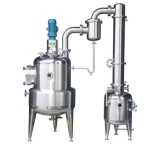
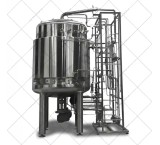
The vacuum distillation column is an advanced device for separating compounds at lower temperatures using negative pressure. This system reduces the boiling point of materials through a vacuum mechanism, enabling the distillation of heat-sensitive substances without chemical decomposition. Its robust design and optimal performance make it ideal for a wide range of industries including pharmaceuticals, chemical industries, and solvent recovery.
Structure and Components
10 Reasons for Vacuum Distillation Column
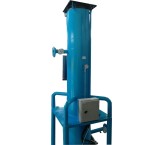
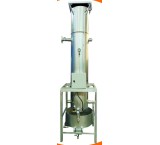
This device includes the following parts:
Distillation column: A 4 mm thick 304 stainless steel cylinder that directs vapor and separates compounds
Condenser: Comprising 23 stainless steel tubes for cooling and condensing vapor into liquid
Vacuum system: Creates negative pressure to lower boiling points and enhance separation efficiency
Vapor inlet and outlet: For directing vapors and collecting distilled materials
Steel structure with rotating wheels: For easy movement and installation in industrial environments
Applications
This distillation column is used in various industries:
Pharmaceutical industry: Distillation of heat-sensitive compounds and extraction of plant extracts
Chemical industry: Separation of different compounds from industrial solutions
Solvent recovery: Purification and recovery of chemical solvents for reuse
Food industry: Extraction of aromatic substances and purification of vegetable oils
Operation Method
Vapor generation: The liquid inside the reactor is heated to produce vapor
Passing through the distillation column: Vapors move within the column and different compounds separate
Condenser: Vapors are cooled and converted back to liquid
Collection of distilled liquid: Purified liquid is collected and prepared for use
Vacuum: Pressure inside the column is reduced to allow distillation at lower temperatures
Economic Review
Energy reduction: Using vacuum pressure lowers boiling points and saves energy
Increased efficiency: Solvent recovery and reduced raw material waste lower production costs
Long lifespan: Use of 304 stainless steel increases durability and reduces maintenance costs
Reduced raw material costs: Recycling and reuse of solvents and distilled materials decrease production expenses
Prerequisites
Stable power supply: To operate the vacuum system and reactor heater
Suitable cooling system: For optimal vapor condensation
Adequate installation space: Placement in industrial environments with sufficient ventilation
Skilled personnel: For operation and maintenance of the system
Main Advantages and Features
Increased distillation efficiency: Vacuum use lowers boiling points
Optimal energy consumption: Reduced need for high heat
Durable industrial design: Stainless steel with long lifespan
Easy mobility: Structure with rotating wheels
Wide application: Suitable for chemical, pharmaceutical, food, and recycling industries
Reduced material waste: Process optimization and waste reduction
A product of Farasanat Steel – Expertise in Industrial Separation Engineering
Introduction
Separation processes in chemical, pharmaceutical, food, and oil & gas industries are among the most important and complex production stages. Vacuum distillation has gained a special place as an advanced and effective method for separating heat-sensitive or high-boiling-point compounds. By reducing system pressure, it lowers boiling points and prevents thermal decomposition.
The Vacuum Distillation Column is a key tool in implementing this type of distillation. Its engineered design has led many leading industries to adopt this equipment for higher purity and better efficiency.
Farasanat Steel Company, with a distinguished history in manufacturing industrial steel equipment, is a pioneer in designing and producing vacuum distillation columns in Iran. Utilizing modern engineering knowledge, standard raw materials, and precise machinery, it offers products of global quality.
Chapter 1: Principles of Vacuum Distillation Column Operation
The vacuum distillation column is a vertical, engineered structure where distillation occurs at pressures lower than atmospheric pressure. This distillation is based on thermodynamic principles: by lowering ambient pressure, boiling points of compounds decrease, allowing heat-sensitive or high-boiling materials to separate without thermal damage.
Why is pressure reduction important?
In conventional distillation, high-boiling compounds require high temperatures to vaporize, which can lead to:
Molecular structure degradation
Changes in color, taste, or odor (especially in food or pharmaceuticals)
Increased energy consumption
Reduced efficiency and final product quality
In vacuum distillation:
Pressure is reduced using a vacuum pump (usually 20 to 100 millibar)
Boiling points of components decrease (e.g., from 200°C to 80°C)
Evaporation and separation occur under milder conditions
Heat-sensitive materials like essences, medicines, and active compounds separate without damage
Vacuum Distillation Column
Introduction
Operation Principles
Applications
Column Design
External Resources
Introduction
The vacuum distillation column is an important industrial device for distilling high-boiling materials. It enables separation of various substances through low-pressure distillation...
Operation Principles
In the vacuum distillation column, distillation occurs at pressures below atmospheric pressure. This low pressure reduces boiling points, making separation easier and faster...
Applications
Chemical industries
Oil and gas industries
Pharmaceutical production
Food industries
Vacuum Distillation Column Design
Design depends on factors such as the type of material to be distilled, column capacity, column type, and other technical features...
External Resources
Comprehensive article on vacuum distillation columns
Technical information on column design
Applications of distillation columns in chemical industries
© 2025 All rights reserved. Design by Farasanat Steel.
Tehran