
There are no comments for this product
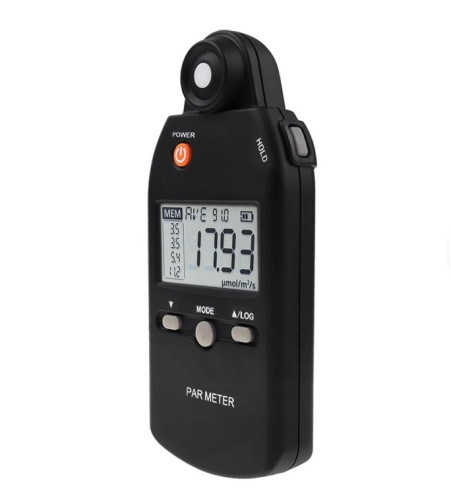
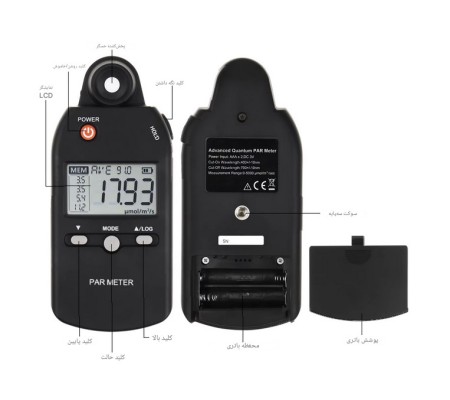
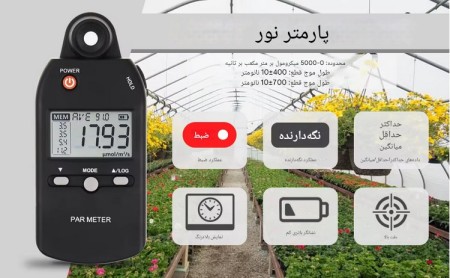
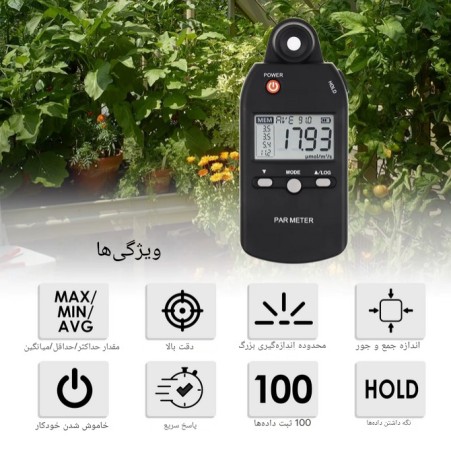
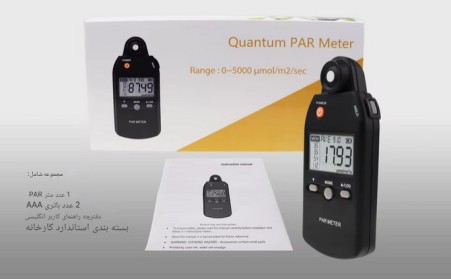
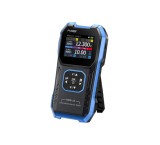
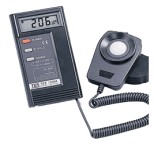
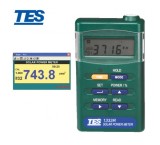
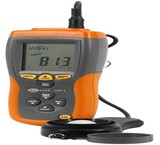
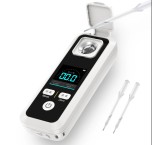
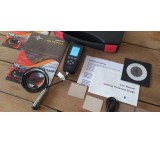
The digital PAR meter and plant growth light tester is an essential tool for professional greenhouse growers, agricultural researchers, and indoor plant enthusiasts. Unlike ordinary lux meters that measure light intensity based on human eye sensitivity, this device measures the photosynthetically active radiation (PAR); that is, precisely the portion of light that plants need for photosynthesis and growth.
Using this device, you can accurately measure the photon flux density (PPFD) reaching the plant leaf surface within the 400 to 700 nm light spectrum. This tool helps you identify the best location for planting or placing pots, optimize the height of grow lights, and ensure maximum health and productivity of your crops.
| Parameter | Technical Specifications |
|---|---|
| Device Type | PAR Meter / PPFD Tester |
| Measurement Range | 0 to 5000 μmol/m²/sec |
| Wavelength Spectrum | 400 to 700 nanometers (visible light effective for plants) |
| Cut-On/Off Wavelength | 400±10nm / 700±10nm |
| Repeatability | ±1 μmol/m²/sec |
| Measurement Rate | 1 time per second |
| Display Resolution | 0.01 (range 0-99) / 0.1 (range 100-999) / 1 (range 1000-5000) |
| Memory Capacity | Records 100 data entries |
| Power Source | 2 AAA 1.5V batteries |
| Body Material | ABS hard plastic |
| Tripod Mount Capability | Yes (standard socket) |
| Dimensions | 115 × 60 × 24 mm |
| Weight | Approximately 115 grams (without batteries) |
In modern agriculture and plant cultivation under artificial light, knowing "how bright the light is" is not enough; we must know "how much useful light reaches the plant." This section provides a detailed review of this device and the importance of measuring PPFD.
Critical Difference Between PAR and Lux in Plant Cultivation The human eye is more sensitive to green and yellow colors, and lux meters are designed accordingly. However, plants primarily need blue and red spectra for photosynthesis. This device measures PAR (Photosynthetically Active Radiation) in the 400 to 700 nm range, counting exactly the photons absorbed by plant chlorophyll. Using this device prevents the common mistake of growers relying on lux meters to adjust grow lights.
High Accuracy in Measuring PPFD The PPFD (Photosynthetic Photon Flux Density) parameter is the standard unit indicating how many photons hit one square meter of leaf surface per second. This device, with a wide range of 0 to 5000 micromoles, can accurately analyze environments from low light (such as mushroom cultivation or shade-loving plants) to very bright conditions (like direct midday summer sunlight). The fast sampling rate (one second) allows users to monitor real-time light fluctuations.
Easy Operation and Professional Features The design of this device is based on practical use in real environments. The tripod mount socket eliminates hand shake during measurement, providing precise data. The large, high-visibility display makes viewing Min/Max/Avg parameters easy. Also, the ability to log 100 data points enables users to map the light distribution (Light Map) of their greenhouse or growth room and identify dark or overly bright spots.
Optimizing Energy Use and Plant Health One of the most important uses of this light analyzer is adjusting the distance of grow lights. Insufficient light causes leggy growth and weak stems, while excessive light (beyond the light saturation point) causes leaf burn and photosynthesis inhibition. With this tool, you can set the light height exactly where the plant grows best and avoid wasting electricity.
What is PPFD and why is it more important than Lux? PPFD (Photosynthetic Photon Flux Density) counts the actual photons plants can use for photosynthesis. Lux only measures brightness based on human vision, which is not an accurate criterion for plants. PPFD is the main standard for plant growth.
Is this device suitable for measuring sunlight and LED lamps? Yes, this device can measure the full light spectrum from 400 to 700 nm and is fully suitable for measuring natural sunlight and all types of plant grow lights (LED, HPS, fluorescent).
What is the suitable PPFD range for different plants? This number varies by plant type. Generally, shade-loving plants need 100-200, common indoor plants 200-400, and fruiting or light-loving plants require values above 500 to 1000 micromoles per square meter per second.
Does the device require calibration? The device is factory-calibrated. Given stable digital sensors, frequent calibration is not necessary for normal use, but annual calibration is recommended for precise research applications.
What does "Cut-off Wavelength" mean in the specifications? This parameter indicates the device's optical filters that ensure the sensor only responds to light useful for plants (400 to 700 nm) and excludes infrared or ultraviolet wavelengths that do not play a primary role in photosynthesis from the PPFD calculation.
There are no comments for this product
| Mobile | +98 913×××5687 |
|---|---|
| Whatsapp link |


Jooyeshgar AI Assistant