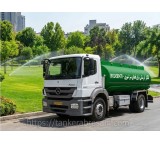
Today, urban green spaces are recognized as the lungs of megacities. Parks, forested gardens, boulevards, and green areas along highways not only help to purify the air and reduce pollutants but also serve as visual refuges for citizens tired of daily hustle and bustle. However, the biggest challenge in maintaining these natural assets, especially in arid and semi-arid climates, is the continuous and optimal supply of water resources. In this context, the "Urban Green Space Water Tanker" service plays a key role as one of the most flexible and efficient solutions for preserving and developing urban vegetation.
Why is tanker irrigation a necessity for urban green spaces?
Many urban areas, especially highway margins, forest parks, or new boulevards, are not connected to the water network. Implementing piping and fixed infrastructure in these areas requires large budgets and extensive excavation operations that disrupt urban traffic. In such conditions, mobile water tankers assist municipal management.
This mobile fleet enables municipalities and contractors to supply the water needed for trees, lawns, and shrubs at specified times and controlled flow rates without the need for costly infrastructure. Flexibility in travel routes and the possibility of scheduling irrigation during the cool hours of the night (to reduce water evaporation) are other advantages of this method.
Specialized features of urban green space water tankers
Watering urban green spaces goes beyond simply transporting water with a regular tanker; this field requires adherence to precise technical and environmental standards:
Type of water and biological health: The water used must not have high salinity (unsuitable EC) or heavy metals, as over time this causes soil structure degradation and drying of plant roots. Usually, treated standard wastewater or authorized non-potable well water is used in these projects.
Discharge and misting equipment: Tankers dedicated to green spaces must be equipped with high-pressure pumps, mist nozzles, and sprinkler systems to distribute water evenly without washing away soil at the tree base or damaging the delicate texture of flowers.
Capacity suitable for the route: Smaller tankers (five thousand liters) are used for entering alleys and local parks, while heavy tankers (ten to twenty thousand liters) are responsible for irrigating highway margins and green belts.
Future outlook; moving towards smart mobile irrigation
With the worsening water resource crisis, intelligent management in water distribution has become increasingly important. Today, modern water tankers are equipped with GPS systems and digital flow meters to determine exactly how much water each area has received. This scientific approach prevents water waste and ensures that the green space water quota is distributed fairly and effectively. Ultimately, water tankers will continue to serve as tireless guardians of urban green belts until the completion of modern irrigation networks.
Tehran