. Introduction
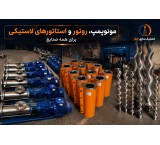
The monopump stator is the fixed rubber part of progressive cavity pumps that, alongside the metal rotor, enables continuous transfer of thick, viscous fluids or those containing solid particles. Choosing the appropriate elastomer and stator structure type (with or without cover) plays a decisive role in service life, efficiency, and maintenance costs in industries such as foam concrete, olive oil extraction, food, and steelmaking.
2. Technical Definition of Monopump Stator
The stator is a rubber liner with a double helical internal cavity, usually molded and cured inside an outer metal tube (cover). The metal rotor with a simple helical geometry rotates inside this cavity, and the moving cavities transfer fluid without noticeable pulsation. The quality of rubber adhesion to the cover (in covered types), dimensional accuracy of the cavity, and uniform rubber thickness are key performance factors.
3. Technical and Engineering Review
Stator performance depends on several parameters:
Dimensional fit with the rotor: improper interference fit causes pressure drop or premature rubber wear.
Chemical resistance of the elastomer against the process fluid (oil, water, alkaline substances, grease).
Thermal resistance and compression set: loss of rubber elasticity at continuous operating temperatures.
Abrasion resistance against solid particles suspended in the fluid.
Quality of rubber adhesion to the metal cover (in covered design) to prevent rubber delamination during operation.
Materials and Raw Materials Review
Elastomer Oil Resistance Water/Alkali Resistance Operating Temperature Suitable For
NBR High Medium Medium (grade dependent) Steelmaking, Oil
EPDM Low High Medium to High Foam Concrete
Food Grade Rubber Depends on base (NR/EPDM/Silicone) High Medium Food, Olive Oil Extraction
HNBR High Medium Higher than NBR Steelmaking, Heavy Abrasive Environments
Exact temperature values, hardness (Shore A), and chemical resistance must be confirmed from the datasheet of the used formulation or reference standards (like ASTM D2000); no elastomer is absolutely superior for all fluids.
Types and Classification of Stators
Standard Stator (with metal cover): rubber is cured inside a steel tube; offers higher structural strength and resistance to internal pressure.
Coverless Stator: rubber is formed without an outer metal tube; lighter weight and lower material cost, suitable for specific designs and connection types.
Stator with NBR Elastomer: for oily fluids and petroleum/steel processes.
Stator with EPDM Elastomer: for water-based slurries like foam concrete.
Stator with Food Grade Elastomer: for direct or indirect contact with food and olive oil.
Industrial Applications
Foam Concrete: pumping air-entrained cement slurry with fine particles; EPDM is commonly chosen due to water and alkali resistance.
Olive Oil Extraction: requires hygienic compatibility and no odor/taste transfer; food grade rubber is preferred.
Food Industry: strict hygiene requirements and frequent washing; selection of grades with food contact approval is essential.
Steelmaking: abrasive and sometimes oily slurries at higher temperatures; NBR or HNBR are generally more suitable.
Stator Selection Criteria
Fluid type and chemical compatibility with elastomer (oily, water-based, food)
Continuous operating temperature and pressure
Solid particle content and fluid abrasiveness
Hygiene requirements or food contact approvals (if needed)
Pump installation and connection type, to decide between covered or coverless stator
Production and Custom Manufacturing Process
Jam Rubber Manufacturing produces monopump stators for foam concrete, food, olive oil extraction, oil, and steelmaking industries, both standard with metal cover and coverless. Elastomer type, precise helical cavity dimensions, and structure type (with/without cover) are finalized based on customer fluid specifications or technical drawings.
Technical Comparison: Covered vs. Coverless
Feature Covered Stator Coverless Stator
Structural strength against internal pressure Higher Medium (design dependent)
Weight and material cost Higher Lower
Ease of installation in some designs Common standard May be simpler
Selection between the two types should be based on actual system working pressure and pump connection type in consultation with technical teams.
Common Errors in Selection or Use
Using EPDM in oily fluids, causing swelling and rapid rubber degradation.
Ignoring proper interference fit between rotor and stator, leading to pressure drop or premature wear.
Choosing coverless stator for operating pressures exceeding its design capacity.
Frequently Asked Questions
Is one elastomer type suitable for all industries?
No; elastomer selection must match fluid type (oily, water-based, food) and each industry's operating conditions.
When is a coverless stator recommended?
Usually for specific designs and operating pressures where lower weight and cost are important; suitability should be reviewed with technical teams.
What is the main difference between NBR and EPDM in stators?
NBR has higher oil resistance, EPDM has higher water and alkali resistance; selection depends on the dominant fluid type in the process.
Summary and Conclusion
Choosing monopump stator material — NBR, EPDM, food grade rubber, or HNBR — and its structure type (with or without cover) must be based on fluid type, temperature, pressure, and industry hygiene requirements (foam concrete, olive, food, steel). Jam Rubber Manufacturing has experience producing both stator types for these industries; sending fluid and system technical specifications to the technical team is the most accurate way to select appropriately.
Sources and References
ASTM D2000 (classification of industrial elastomers), general food contact standards for elastomers, and technical datasheets from rubber compound manufacturers; exact temperature, hardness, and chemical resistance values must be verified from the formulation technical documents.
Rubber Stator - Foam Concrete Stator - Olive Stator - Coverless Stator
Esfahan