How is plastic bag production done?
Plastic bag production, despite its simple appearance, is a precise and multi-step process that starts with melting polyethylene granules and continues until the final sewing and packaging. Everything begins with selecting the appropriate raw materials; usually, low-density polyethylene (LDPE) or high-density polyethylene (HDPE) is used for producing these types of bags. The difference in the chosen grade determines the thickness, transparency, and final strength of the product.
In the first stage, the granules enter the blown film extruder machine. In this machine, the materials melt at about 170 to 200 degrees Celsius and are guided through a screw towards the die mold. Then, passing through the die, a thin polyethylene film emerges in a tubular shape and is simultaneously blown upwards with compressed air. This process, called Blown Film, is what gives the nylon its long, transparent bubble appearance. The height of this bubble and the air speed determine the film's thickness and quality.
Once the film cools, it enters the collecting rollers to be rolled up. Quality control is very important at this stage; if the temperature or roller rotation speed is not properly set, the film becomes wrinkled, opaque, or brittle. Professional manufacturers produce a smooth and uniform film—the fundamental base of all bags—by precisely adjusting the screw temperature and air pressure.
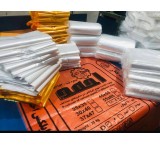
Next, the prepared rolls are transferred to the cutting and sewing unit. Here, thermal welding machines cut the bags into various sizes based on the order type (with handles, garbage bags, freezer bags, promotional bags in packs of 50 or 100 or rolls). The heat from the welding nozzle melts the edges and firmly bonds them together. Then comes printing. If needed, the store's design or logo is printed on the bag, usually done with flexo or helio machines.
The final stage is packaging and counting. Bags are packaged in packs of 50 or 100 and are ready to be sent to the market. Attention must be paid at this stage to keep the room temperature and machine pressure stable so that the seams do not open.
At first glance, it might seem that producing plastic bags is a simple task, but experience shows that the final quality completely depends on three factors:
Correct selection of raw materials and polyethylene grade
Precise adjustment of extruder temperature and pressure
Operator skill in controlling film thickness and production speed
For this reason, factories that source their raw materials from specialized suppliers like Ahmad Plast usually offer products with higher transparency, strength, and durability—because the foundation of a quality bag always starts with good raw materials.
Tehran