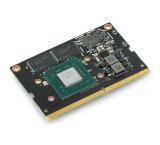
Jetson Nano 4G is an embedded processing module from NVIDIA designed to run AI and deep learning models at the network edge. This platform, focused on computer vision, robotics, and image processing, enables rapid prototyping through to stable deployment in operational environments.
Leveraging NVIDIA GPUs, Jetson Nano 4G delivers efficient execution of complex algorithms and neural network models in a compact form factor. The built-in 16GB eMMC memory also provides local storage for data, models, and applications without immediate need for external memory.
Key Features & Benefits
Hardware acceleration for neural networks and image processing with NVIDIA-based GPU
16GB built-in eMMC memory for secure storage of OS, models, and logs
Suitable for computer vision, robotics, and real-time edge processing applications
Compact size and power consumption ideal for product integration and stable deployment
Mature development ecosystem supporting common AI tools and frameworks
Product Details
Platform Manufacturer: NVIDIA
Product Type: Embedded Compute Module
Target Domains: Computer vision, robotics, image processing, deep learning
Internal Storage: 16GB eMMC
Capabilities: Machine learning algorithms and convolutional neural networks
Usage Form: From prototype development to deployment in end devices
Real-World Applications
In production lines, Jetson Nano 4G can be used for image-based quality inspection; defect detection models run on the module itself and results are sent instantly to the control system. Thanks to local storage, models and reference data are kept on the eMMC, allowing seamless software updates during production.
In service and mobile robots, integrating this module enables simultaneous object detection, tracking, and visual navigation. Edge processing reduces network dependency and minimizes response latency for real-time decision-making.
In smart city solutions, Jetson Nano 4G can analyze video streams from cameras; event detection, counting people or vehicles, and automatic alerts are all performed on-device to preserve data privacy and manage bandwidth consumption.
Ideal Customer Profile
R&D teams in industrial companies and equipment manufacturers seeking to integrate machine vision and AI capabilities into their products.
Startups and academic groups needing an affordable and reliable platform for rapid prototyping and testing deep learning models.
System integrators and robotics companies requiring real-time edge processing and software infrastructure compatible with common frameworks.
Getting Started
To begin, set up your development environment with the necessary tools and libraries, convert machine learning models to a platform-executable format, and deploy them to the eMMC memory. Then connect input data streams (cameras or sensors) and configure the image processing and inference pipeline.
After validating performance in lab conditions, containerizing applications and defining remote update processes is recommended to securely and controllably maintain and release new model versions. This approach facilitates the transition from prototyping to field deployment.
Esfahan