
There are no comments for this product
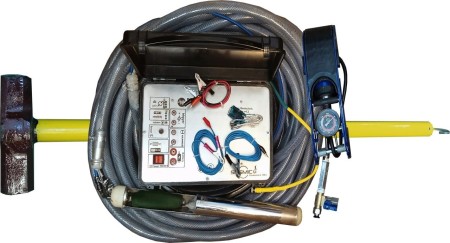
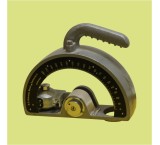
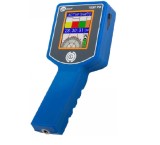
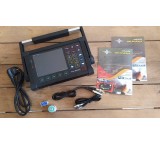
non-destructive test sensor for piles and foundations in various types including concrete and reinforced concrete, which is fully synchronized with the Dunhole and surface digitizers of Zemin Emin Company.
Introducing Pile Integrity Test Test:
The implementation of in-place piles always faces questions about the quality and integrity of the final product, because it is not possible to directly inspect the pile after implementation. In prefabricated piles, it is possible to directly inspect the pile structure before driving, but in cast-in-place piles, where the pile structure is formed at the same time as digging in the soil, there are naturally more uncertainties related to the quality and actual dimensions of the pile structure. Of course, initial controls such as sampling of concrete before emptying into the drilling well or recording the volume of poured concrete for piles are carried out in all piling projects, but the process of implementing piles in situ faces problems that affect the quality of their implementation. Data and inspection makes them necessary. Some of these problems are:
- Drifting or falling of the well wall and creating a narrow area in the pile section (necking)
- Failure to reach the final drilling length due to the mistake of the executive group or failure to follow the instructions
r\n- Non-use or incorrect use of thermal pipe for concreting
- Disturbance or stoppage during drilling and concreting operations
PIT test is one of the non-destructive methods to detect the integrity and health of the pile, which It is very common due to its ease and reasonable price. In this test, a light hand hammer weighing 0.5 to 10 kg is applied to the head of the pile, which creates a compressive stress wave along the length of the pile. The primary wave is returned to the pile head wherever it encounters a change in the dimensional-mechanical properties of the pile structure, or impedance.
How to perform the PIT test:
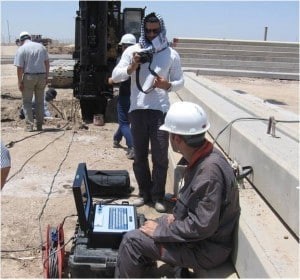
\r\ The PIT test does not require special preparation. Only the connection point of the sensor and the place where the hammer is applied should be cleaned of excess material or concrete mixed with soil and smoothed to some extent. Then the accelerometer sensor is connected to the pile head using a kind of temporary liquid glue and at the same time as the hammer blows, the data is stored in the main device. Accelerometer) is measured and recorded in the device's memory after initial data processing. By analyzing the speed waves per unit of time, the following information can be obtained: - Estimation of the actual length Piles
- Estimating the place of possible decrease or increase of the pile section
- Drawing the longitudinal section of the pile
- Finding abnormal and damaged piles
PIT test as a useful, simple and economical method on It is based on the ASTM-D5882 standard.
There are no comments for this product

| Company | زمین ایمن |
|---|---|
| Tel | +98 513-9×××301783 |
| Mobile | +98 937×××1783 |
| Telegram | Telegram link |
| Country | Iran |
| Province | Khorasan Razavi |
| Address | مشهدسنابادسنایی |



Jooyeshgar AI Assistant