Ceramic Honeycomb Packing in Chemical Industries; A Decision Beyond Choosing a Packing
In the design and operation of industrial equipment, selecting packing is not limited to procuring a piece or filler material. The type of process, operating conditions, and material compatibility with the working environment all play roles in engineering decisions. This issue becomes even more significant in chemical industries, especially processes dealing with acidic environments, because an inappropriate equipment choice can affect the overall performance and maintenance requirements.
In such conditions, Ceramic Honeycomb Packing is one of the options that must be evaluated based on the actual process needs and the product's technical specifications. For process engineers and technical managers, the main question is not just what type of packing to choose; rather, it is how well the product matches the equipment's working conditions.
Why Does Packing Selection Require More Detailed Examination?
Packings are used as part of the internal structure in some process equipment, including industrial towers. The expected performance of these components depends on the tower type, the nature of operations, and the contact conditions between process streams. Therefore, packing selection cannot be considered independently from the overall system design.
In chemical industries, this evaluation must consider the nature of contacting materials, operating conditions, and process requirements. Chemical resistance, if confirmed for specific working conditions, can be an important selection criterion; however, simply being ceramic is not enough to conclude compatibility with all acidic environments.
Thus, engineering decisions become more reliable when product specifications are reviewed alongside actual operating conditions.
Ceramic Honeycomb Packing; Product Structure Alongside Process Requirements
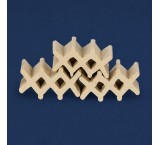
Ceramic honeycomb is known for its cellular geometric structure. However, evaluating this product for industrial use should not rely solely on its appearance or geometric shape. Structural specifications, ceramic material, dimensions, and allowable operating conditions are among the information needed to assess product suitability for the intended application.
In industrial applications, the features of a packing become meaningful when their relation to equipment needs is clear. For example, a process engineer must know whether the chosen product is compatible with the chemical environment, operating temperature, and mechanical system requirements.
Therefore, the evaluation of ceramic honeycomb packing should be based on documented technical information, not merely on product title or general category.
What Criteria Should Be Examined in Acidic Environments?
Acidic environments vary significantly in terms of substance type, concentration, temperature, and contact conditions. Consequently, a general judgment about the performance of all ceramic products against all acids cannot be made.
To evaluate a ceramic packing in such environments, attention to several aspects is essential:
Chemical Compatibility: Assessing the resistance of the base material against the chemical composition and concentration in the process.
Temperature Conditions: Matching the operational temperature range with the product's allowable specifications.
Dimensions and Structure: Checking the suitability of the product's geometry and size with equipment design and process requirements.
Operating Conditions: Considering mechanical loads, installation methods, and conditions that may affect product durability.
Technical Documentation: Reviewing manufacturer information and data related to the intended application before final decision-making.
These assessments lead to a choice that considers the full set of real working conditions rather than relying on a single characteristic.
From Product Specifications to Final Engineering Decision
An important point in supplying industrial equipment is distinguishing general product specifications from its performance in a specific application. Even if two products belong to the same general category, differences in raw materials, geometry, dimensions, or allowable use conditions can affect their suitability for a project.
Therefore, before selecting ceramic honeycomb packing for an industrial tower, the product's technical information must be matched with project needs. The process type, chemical environment, operating temperature, and equipment design requirements should be the basis of this evaluation.
Such an approach helps engineers make equipment choices within the technical considerations of the project and avoid decisions based on general claims or comparisons lacking clear criteria.
The Role of Aria Acid Resistance Alborz in Product Evaluation and Selection
For companies and industrial entities examining options related to equipment and materials used in chemical environments, access to clear product information is part of the decision-making process.
In reviewing ceramic honeycomb packing from Aria Acid Resistance Alborz, the selection basis should be the product's available technical specifications and its compatibility with project requirements. Precise declaration of material, dimensions, allowable operating conditions, and chemical compatibility information, if documented, can make the evaluation more targeted for technical experts.
If you are considering this product for an industrial application, define your process needs and operating conditions before finalizing your choice, and align the product's technical data with these requirements. This path enables more accurate comparison of options and making a decision suited to the real conditions of the project.
Tehran