[What is the Best Fertilizer for Enlarging Pistachio Fruit?] This is one of the most important questions for orchardists who want, during the growing season, not only to increase fruit size but also to achieve better weight and quality of the pistachio kernel. Enlarging pistachio fruit and increasing kernel weight is not limited to using a high-potassium fertilizer; rather, it depends on the balance of nutrients, leaf and root health, proper irrigation, salinity control, and tree load.
In this guide, we review the roles of potassium, nitrogen, phosphorus, calcium, and micronutrients, the timing of feeding, and fertilizer application methods. Note that the amount and type of fertilizer should be adjusted according to soil and leaf tests and the conditions of each orchard.
Contact number: 09155732004
Which is the Best Fertilizer for Enlarging Pistachios?
There is no one-size-fits-all solution for all pistachio orchards. If potassium in the soil or leaves is limiting, potassium fertilizer can help correct the deficiency and support the plant's natural activity. If the main limiting factors are water shortage, salinity, weak roots, or excessive load, increasing fertilizer alone will not solve the problem.
Nutrient sources that may be included in the program based on test results include potassium sulfate, complete NPK fertilizers, calcium sources, and micronutrients such as boron, zinc, and magnesium.
Note: None of these fertilizers should be introduced as a product with guaranteed and independent effects for enlarging fruit.
Contact number: 09155732004
Potassium Fertilizer; Its Role in Fruit Growth and Kernel Filling
Potassium plays a role in regulating stomata, water balance, enzyme activity, and the transport of sugars and other photosynthesis products. Therefore, its adequate supply is important for normal tree function and crop growth; however, a response to potassium fertilizer is expected only when there is a real deficiency or need.
Potassium Sulfate or Solupotash
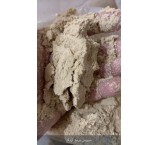
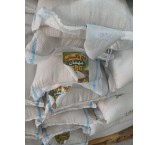
Potassium sulfate is a source of potassium and sulfur. Its selection compared to other potassium sources should consider water and soil salinity, sulfur needs, product quality, and compatibility with the irrigation system. To learn about product specifications, you can see the potassium sulfate (Solupotash) fertilizer page.
Solupotash application should be based on orchard needs and product label instructions; a fixed and general amount is not recommended for all orchards.
The Role of NPK Fertilizer in Balanced Pistachio Nutrition
NPK fertilizers provide the three major nutrients to the plant, but their appropriate ratio depends on the growth stage, tree condition, and soil test:
Nitrogen: Essential for branch and leaf growth and maintaining active leaf area; excessive use can cause unbalanced vegetative growth.
Phosphorus: Involved in energy transfer and metabolic processes; its use should be proportional to soil status.
Potassium: Involved in water regulation and photosynthate transport; its deficiency must be corrected.
Do not select high-potassium or balanced formulas solely based on the name or percentage on the package; soil test results and expert recommendations should guide decisions.
Contact number: 09155732004
What Roles Do Calcium, Boron, Zinc, and Magnesium Play?
Calcium participates in cell wall structure and tissue stability, but calcium fertilizer should not be considered a direct kernel enlarger. Boron is involved in pollen tube growth and seed formation, zinc in enzyme activity and bud growth. Magnesium is the central part of the chlorophyll molecule and essential for photosynthesis.
These micronutrients or secondary elements should only be applied if a need is diagnosed and at recommended doses. Especially boron has a narrow safety range, and overuse can cause toxicity.
Best Timing for Fertilizing to Enlarge Pistachios
The timing depends on the fertilizer type, tree phenology, regional climate, and orchard nutritional status. Instead of a fixed calendar, monitor growth stages:
Before the growing season: Soil testing and reviewing fertilization history, salinity, and root status to adjust the program.
After fruit set: Monitor soil moisture and nutritional status; supply needed elements based on technical recommendations.
Kernel growth period: Maintain uniform irrigation, leaf health, and adequate potassium and other elements; prevent drought and salinity stress.
After harvest: Evaluate tree status and plan nutrition for the next period, considering timing and regional conditions.
For precise timing and amounts, use leaf tests at recommended times for the region and expert interpretation.
Fertilizer Application Methods in Pistachio Orchards
Fertigation: Use only soluble fertilizers compatible with the system. Check water quality, emitter clogging, and mixability.
Soil application: The fertilizer placement should match the active root zone and soil moisture; avoid direct contact of concentrated fertilizer with roots.
Foliar spraying: Only for products whose labels permit this method. Concentration, air temperature, and mixing should follow manufacturer instructions.
Avoid arbitrary mixing of fertilizers, especially calcium sources with incompatible compounds.
What Other Factors Affect Pistachio Size Besides Fertilizer?
Regular irrigation and prevention of drought stress during sensitive growth stages
Managing soil and water salinity and ensuring proper drainage
Root health and control of diseases and pests
Load management and attention to alternate bearing phenomenon
Maintaining healthy leaf area to supply photosynthates
Balanced nutrition and avoiding excessive fertilizer use
To determine orchard nutritional needs, studying the agricultural soil testing guide and selecting fertilizers based on its results can be a good starting point.
Also, see the articles "Pistachio Tree Fertilization Guide in Khordad Month" and "Pistachio Nutrition and Winter Fertilizer Hole Guide" for further study.
Summary: Which Fertilizer Should We Use to Enlarge Pistachios?
To increase fruit size and kernel weight, the limiting growth factor must first be identified. Potassium sulfate can be a source of potassium and sulfur if needed; NPK fertilizers, calcium, boron, zinc, and magnesium are included in the program only based on real needs.
No single fertilizer alone guarantees fruit enlargement. Proper irrigation, salinity control, root health, load management, and maintaining healthy leaves are equally important.
For product specifications and purchasing conditions, visit the Solupotash page in the Atieh Sabz store. Please check product availability and sales conditions on the product page.
Atieh Sabz supports farmers and orchardists in making informed input choices and managing plant nutrition properly.
Tehran